
We all have a brook. It’s that reliable source. The job always provides. The health that never fails. The comfort that never runs dry. We settle there, by its banks, thankful for God’s provision. Like the prophet Elijah, we drink from it day by day, trusting it will always be there. We love routines of grace. We get used to God providing in a certain way through a particular channel, in a familiar pattern. It feels safe. But what happens when the channel changes? When the ravens stop coming, and instead, God points you to a widow with an empty cupboard?
God had commanded ravens to feed Elijah by the Brook Cherith. It was miraculous, yet solitary. Just the prophet, the birds, and the flowing water. But then, without fanfare, the brook dried up. “Sometime later, the brook dried up because there had been no rain in the land.” (1 Kings 17:7).
Why? If God is all-powerful, couldn’t He have kept that water flowing? Of course. The drying brook was not a failure of God’s power, but a progression of His purpose.
God wasn’t trying the brook. He was leading His man.
The end of the brook was the beginning of a new chapter. “Go at once to Zarephath,” God said. “I have directed a widow there to supply you with food.” (1 Kings 17:9). The provision shifted from the beaks of ravens to the hands of a poor widow. From solitary miracle to shared community. From merely sustaining one man to setting the stage for a greater miracle that would sustain a whole household through famine.
Here is the beautiful truth: God dries up one source to open another, not just for our sake, but for the sake of others He wants to touch through us.

Your drying brook is not your crisis. It is your cue. It means God is moving you from what was sufficient to what is significant.
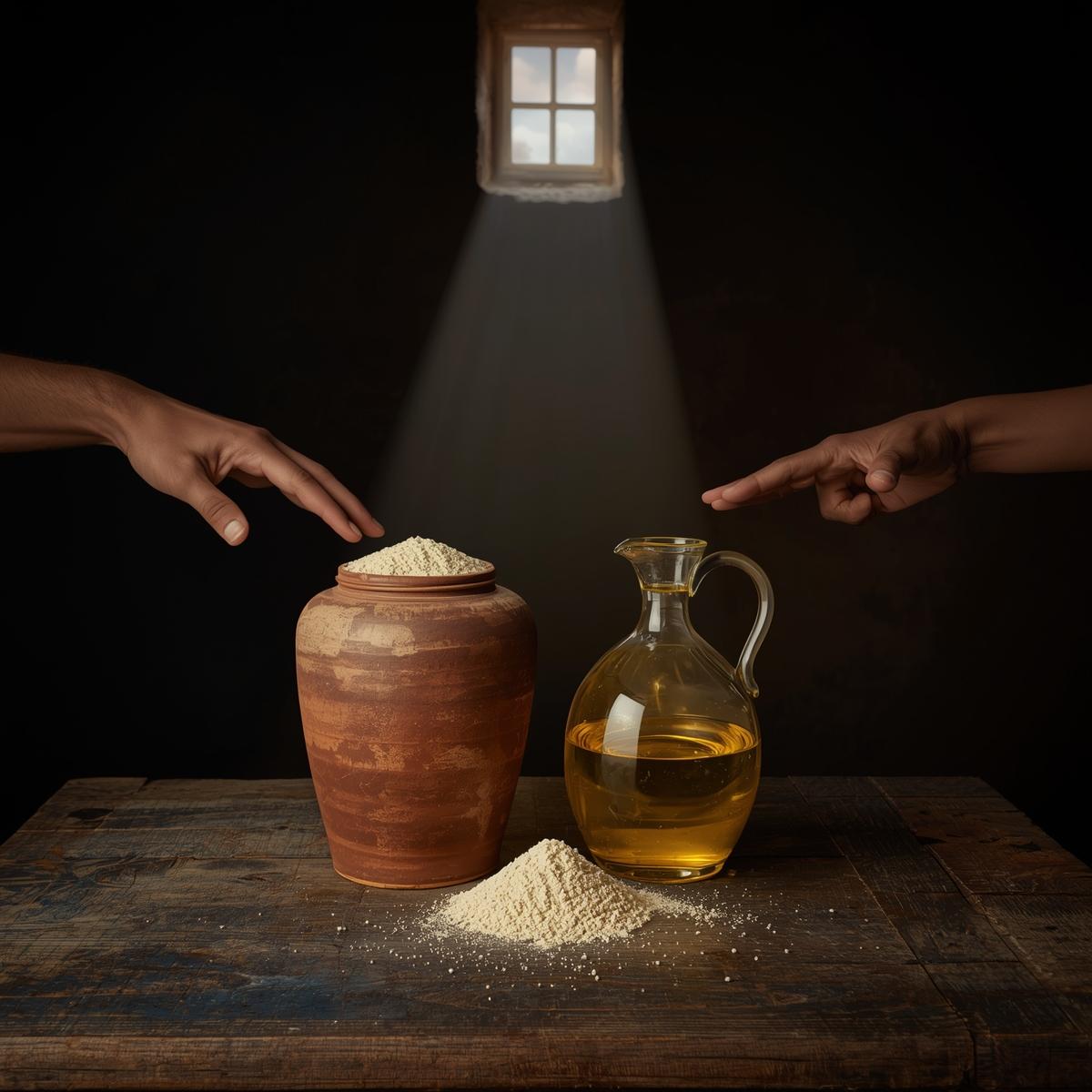
The widow needed Elijah as much as he needed her. Her jar of flour and jug of oil would never have known their own miracle if Elijah had stayed comfortably by his brook.
He shifts the source of our sustenance to stretch our faith and to multiply our witness. The ravens kept Elijah alive, but the widow’s story taught a nation about trust. Her handful of flour and few drops of oil didn’t run out. Day by day, there was just enough. The miracle became daily, intimate, and shared.
Consider the Israelites in the desert. Manna from heaven, yes, but it fell six days a week. On the sixth, they gathered double. The provision taught them obedience and trust in rhythm. Or think of Jesus feeding the five thousand. He didn’t create a feast from thin air initially; He started with a boy’s meager lunch. God loves to use the unlikely, the insufficient, to show His sufficiency.
Think of Joseph. The pit led to Potiphar’s house. The prison led to the palace. Each closed door was not an abandonment but a redirecting to a larger purpose.
Why does He do this? God is less interested in simply maintaining us and more interested in involving us and others in the story of His faithfulness. The dried brook moved Elijah from a place of isolation to a place of community. From being solely a recipient to becoming a conduit of blessing for an entire household.
If your “meal” has moved today, if the job ended, the help vanished, or the health declined, do not despair. Do not think God has forgotten you. He is simply redirecting your dependence. He is shifting your story from a private miracle to a shared testimony.
Your Zarephath is waiting. It may look improbable. It may seem insufficient. But there, in the place of obedience, you will find that the jar of flour will not be used up, and the jug of oil will not run dry. Not because the resources are plentiful, but because the Provider is faithful.
He is the God who moves the meal so that we will move our feet, and so that others will see His goodness at the table He prepares.
So if you’re watching your brook slow to a trickle today, don’t panic. Don’t dig frantically in the mud, trying to revive what God is clearly moving you from. Look up. Listen. He is already saying, “Go to Zarephath.” Your next provision is often connected to your next assignment, and it usually involves someone else’s blessing.
The brook was for Elijah alone. The widow’s house was for a testimony that would echo through generations. God always leads us from solitary sustenance to shared stories of grace.
He is not just supplying needs. He is building a narrative of trust. Your empty brook is simply the turn of the page.
Trust HIM today.