
The Living Word: The Story of the Bible
The Bible is not just one book. It is a collection of many books, written by many people, over a very long time. Its story is a journey. It is a story of how words written on old animal skins and papyrus scrolls were kept safe, translated, argued over, copied by hand, printed by machines, and now read on glowing screens. It is a story of great faith, huge arguments, and amazing inventions. This is the story of how the world’s most important book has changed and stayed the same for over two thousand years.
1. The Beginning: Scrolls and the First Big Translation (Before 250 BC)
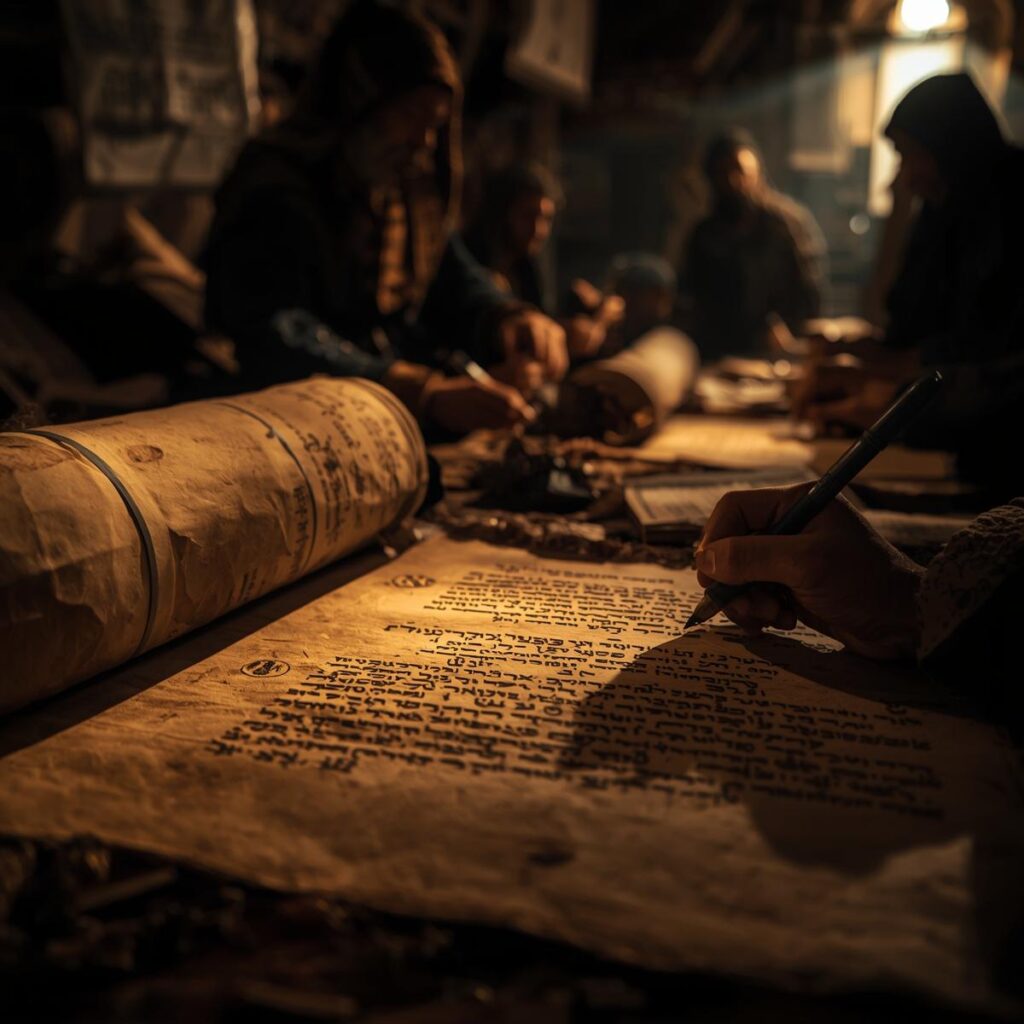
In the very beginning, there were no Bibles as we know them. Stories were told out loud. Later, they were carefully written down by hand on long rolls called scrolls, made from animal skins (parchment) or a reed plant (papyrus).
- The Old Testament: This part was first written in ancient Hebrew (and a little Aramaic) by the Jewish people.
- The First Translation Is The Septuagint (c. 250-100 BC):
- What it is: The Hebrew Bible was translated into Greek. This happened because many Jewish people lived in places where Greek was the common language, like Alexandria, Egypt.
- The Name: “Septuagint” means “seventy.” A legend says 70 (or 72) scholars worked alone and miraculously created 70 identical translations.
- What We Should Know: This was the Bible of the early Christians. The writers of the New Testament often quoted from this Greek version.
2. The Latin Masterpiece: Jerome’s Vulgate (c. 382-405 AD)
As Christianity spread through the Roman Empire, most people spoke Latin, not Greek or Hebrew. The old Latin translations were messy and full of mistakes.
- The Scholar: A man named Jerome was given a huge job: make one good, clear Latin Bible from the original languages.
- The Work: He spent over 20 years translating the Hebrew Old Testament and Greek New Testament into common (or “vulgar”) Latin. His work was called the Vulgate.
- What We Should Know: The Vulgate became the one official Bible for the Western Christian Church for more than 1,000 years. It shaped all of Western Christian thought.
3. The Handwritten Centuries and a Dangerous Idea (400s – 1450s AD)
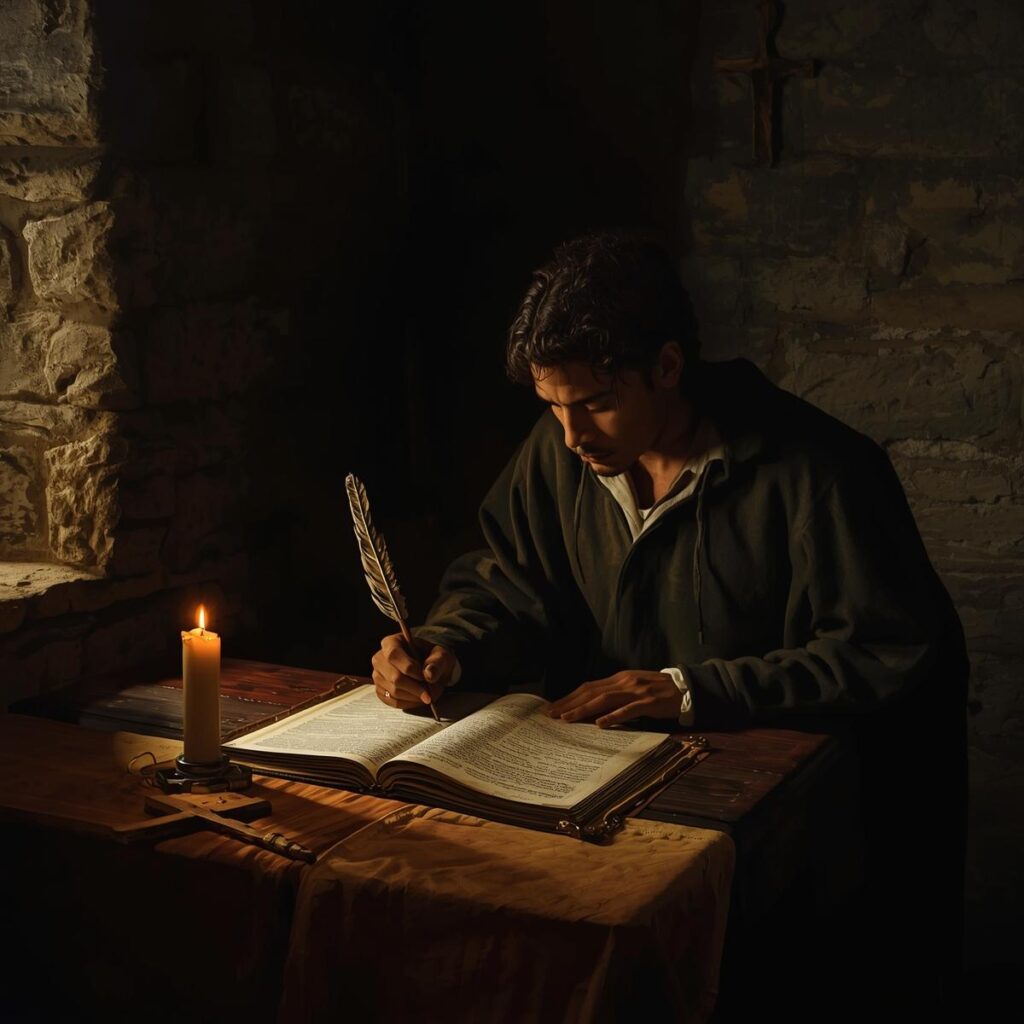
For over a thousand years after Jerome, every single Bible in Europe was copied by hand. This was done by monks in quiet rooms called scriptoriums.
- The Work of Monks: These men spent their whole lives copying the Vulgate. They made them beautiful with painted pictures (illuminations) and gold leaf. These Bibles were very expensive and rare.
- A Controversial Idea: Some people started to think, “Why can only priests read the Bible in Latin? Shouldn’t regular people read it in their own language?”
- John Wycliffe & the First English Bible (1380s):
- An English scholar named John Wycliffe believed everyone should read the Bible. He and his followers translated the entire Bible from the Latin Vulgate into Middle English.
- The Controversy: The Church said this was illegal and heretical (against God’s law). They did not want people interpreting the Bible for themselves.
- The Books: Since there was no printing press, every single Wycliffe Bible was handwritten. People who owned them, called Lollards, could be punished severely, even killed. But the idea spread.
4. The Printing Revolution: Gutenberg Changes Everything (1455 AD)
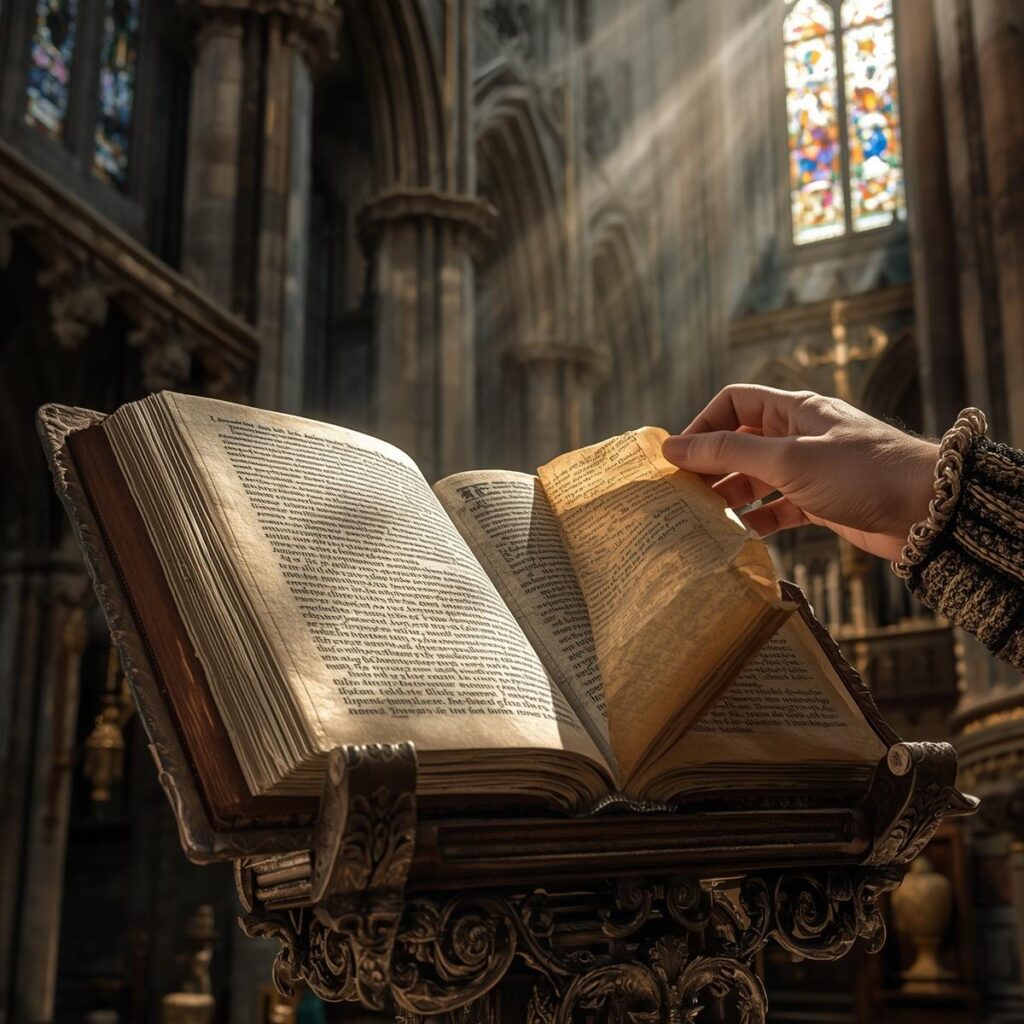
The biggest change in the Bible’s history came from a machine.
- The Inventor: Johannes Gutenberg of Mainz, Germany, invented the movable-type printing press.
- The First Printed Book: The first major book he printed was the Bible, the Gutenberg Bible (it was the Latin Vulgate).
- What We Should Know: Suddenly, books didn’t have to be copied slowly by hand. Many identical copies could be made fast and cheaper. Knowledge, and the Bible, could now spread like never before. The handwritten age was over.
5. Explosion of Translations: Bibles for the People (1500s-1600s)
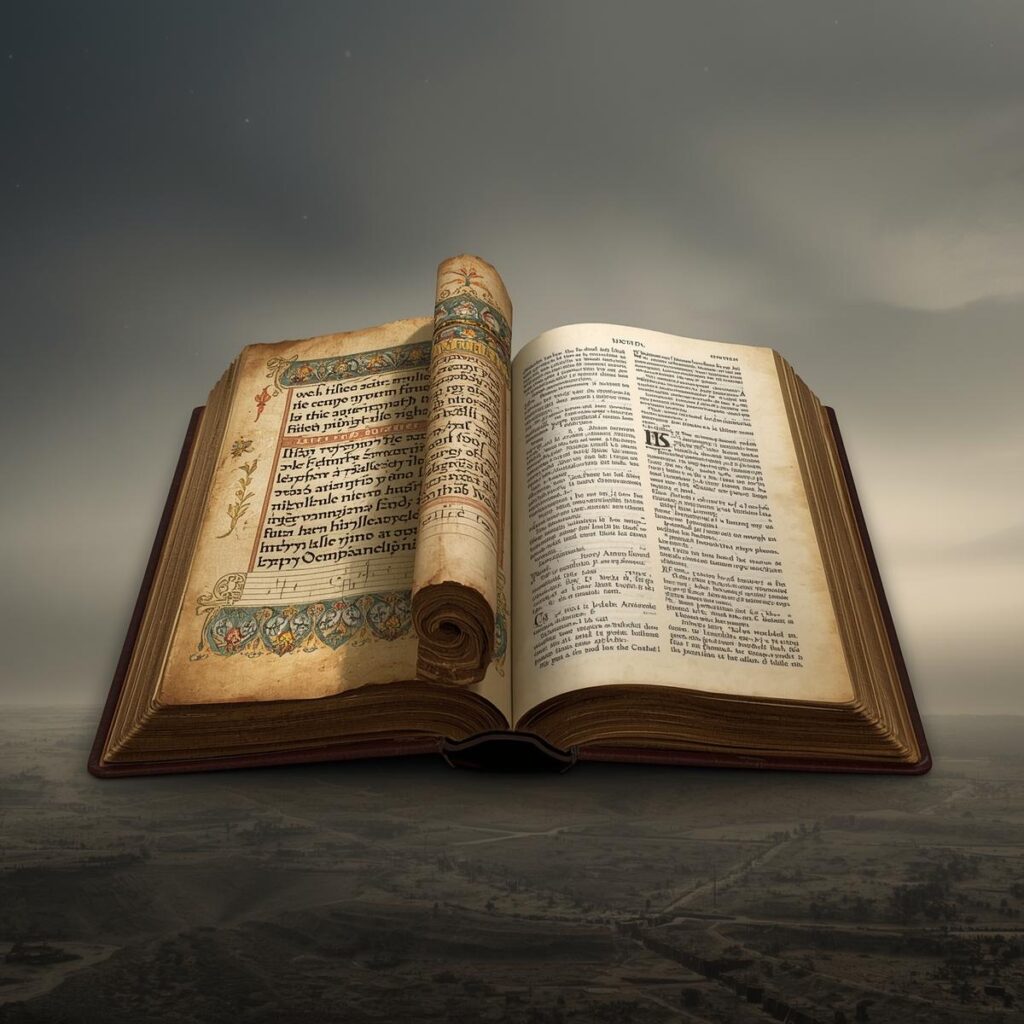
With the printing press, the fight over who could read the Bible exploded, especially during the period called the Reformation.
- The Geneva Bible (1560):
- What it is: A new English translation made by Protestant scholars who fled to Geneva to escape a Catholic queen.
- The Controversy & Features: It was full of study notes in the margins. These notes often criticized kings and popes, calling them tyrants. It was the first English Bible with verse numbers.
- What We Should Know: It was the Bible of Shakespeare, the Pilgrims, and the Puritans. For many, it was more popular than the famous King James Bible for decades.
- The King James Version (KJV) (1611):
- The Reason: King James I of England hated the anti-king notes in the Geneva Bible. He ordered a new translation to replace it.
- The Work: About 50 scholars worked on it, using the best Hebrew and Greek texts they had.
- The Legacy: While not popular at first, its beautiful language (“The Lord is my shepherd…”) made it the most famous English Bible for 300 years.
6. The Modern Era: Old Discoveries and New Choices (1800s – Today)
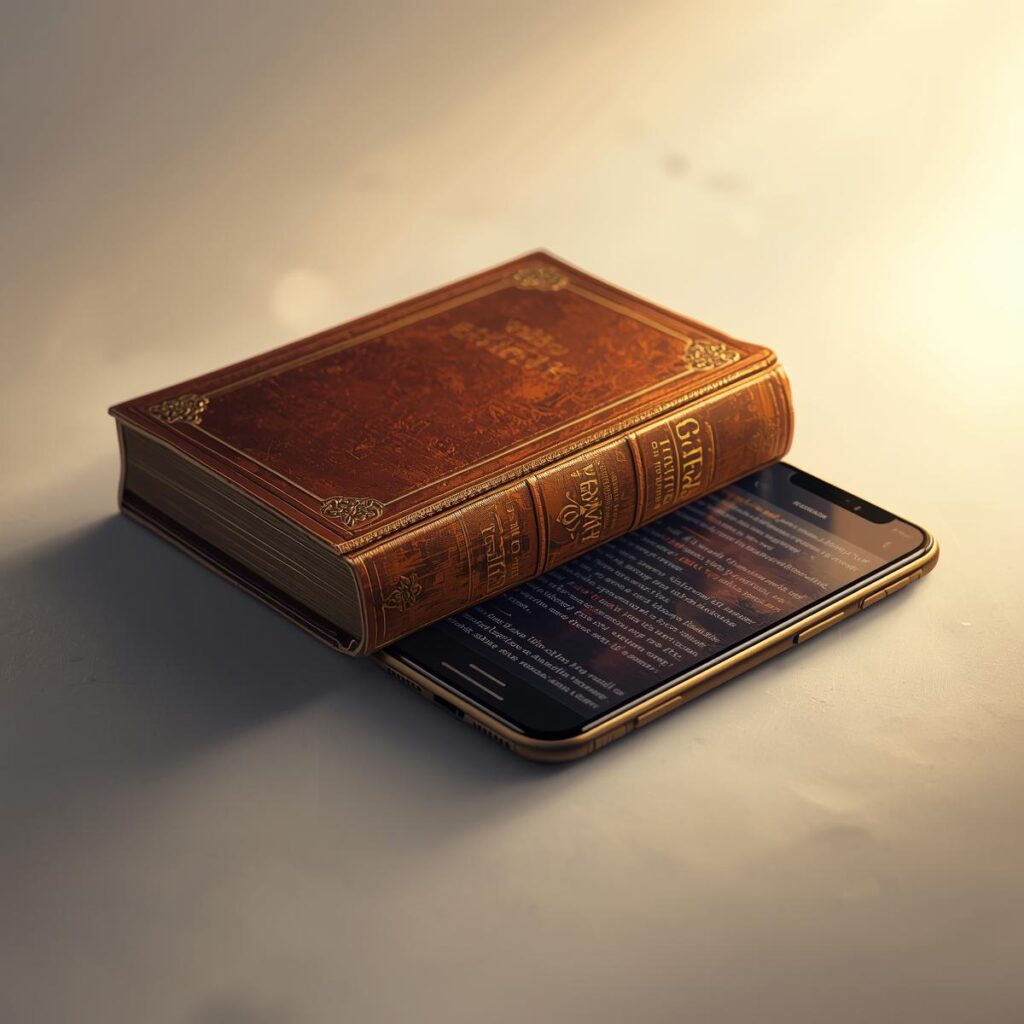
Two big things changed the Bible in the last 200 years:
- We Found Older Manuscripts: Discoveries like the Dead Sea Scrolls (1947) gave us Hebrew copies 1,000 years older than what the KJV translators had, proving the text was copied very accurately.
- New Translation Goals: Scholars now wanted to use the oldest, best sources and make the Bible clear for modern readers.
This led to many different types of Bibles today:
- We have very accurate translations, like the New American Standard Bible (NASB).
- Versions like the New International Version (NIV), the most popular modern English Bible, balance accuracy & readability.
- The Message, TPT versions, which reads like a novel or a paraphrase of verses