

Sin, Transgression, and Iniquity: Understanding the Differences and Consequences. First, the Stray, then the Leap, and the Chain that binds.
We are going to be Untangling the concept of Sin, Transgression, and Iniquity
The concepts of sin, transgressions, and iniquity are central to Christian theology, shaping humanity’s understanding of morality, divine justice, and redemption. The Scriptures and the early Church Fathers gave us deep insights into these terms, their origins, their impact on mankind, and God’s remedy through Jesus Christ.
This article explores the nature of sin, whether it has degrees, how divine justice apportions punishment, and the atoning work of Christ.
I remember the first time I truly felt the weight of my own actions. It wasn’t a dramatic, life-shattering event. It was a slow, creeping realization, like a shadow detaching itself from the wall. I had been nursing a grudge against a close friend for a minor oversight, and over weeks, that small hurt had festered into a cold bitterness. I felt justified, yet I also felt a strange, spiritual disconnection. I was a “good person,” but I felt far from God. It was in that season I began to understand that our separation from God isn’t just about the big, bad things we do. It’s a spectrum, and the Bible gives us three powerful words to describe it: sin, transgression, and iniquity.
1. Sin: The Universal Stray

Definition: In the Bible, words for wrongdoing are often used interchangeably, but understanding their distinct meanings gives us a deeper appreciation of God’s holiness and the comprehensive nature of Christ’s sacrifice. At its core, Sin is the broadest term. The original Hebrew word, chatta’ah, and the Greek, hamartia, literally mean “to miss the mark.” Picture an archer shooting at a target and completely missing the bullseye. Sin, therefore, is any thought, action, or disposition that falls short of God’s perfect standard of righteousness. As Romans 3:23 confirms, “for all have sinned and fall short of the glory of God.” It is the inherent state of imperfection that plagues humanity.At its heart, sin is simply “missing the mark.”It’s our inherent tendency to fall short of God’s perfect standard of holiness.
How to Recognize It:
Sin often doesn’t feel like a monstrous act. It feels like a quiet compromise. It’s that sharp word you snap at your child when you’re tired. It’s the little white lie you tell to avoid awkwardness. It’s the envy that pricks your heart when a friend shares their good news. My story of bitterness was a classic case of sin. I had missed the mark of forgiveness and love. The Apostle Paul puts it plainly: “For all have sinned and fall short of the glory of God” (Romans 3:23). We all have these stray arrows.
How to Fight It:
The fight against sin is a daily recalibration of our aim. It requires honesty and humility. Each day, we must ask the Holy Spirit to reveal where we are missing the mark. It’s in the moment we pause before speaking in anger, or choose gratitude over envy. We fight it by immersing ourselves in the standard God’s Word and relying on His strength, not our own. Remember, “I can do all things through Christ who strengthens me” (Philippians 4:13).
2. Transgression: The Willful Leap
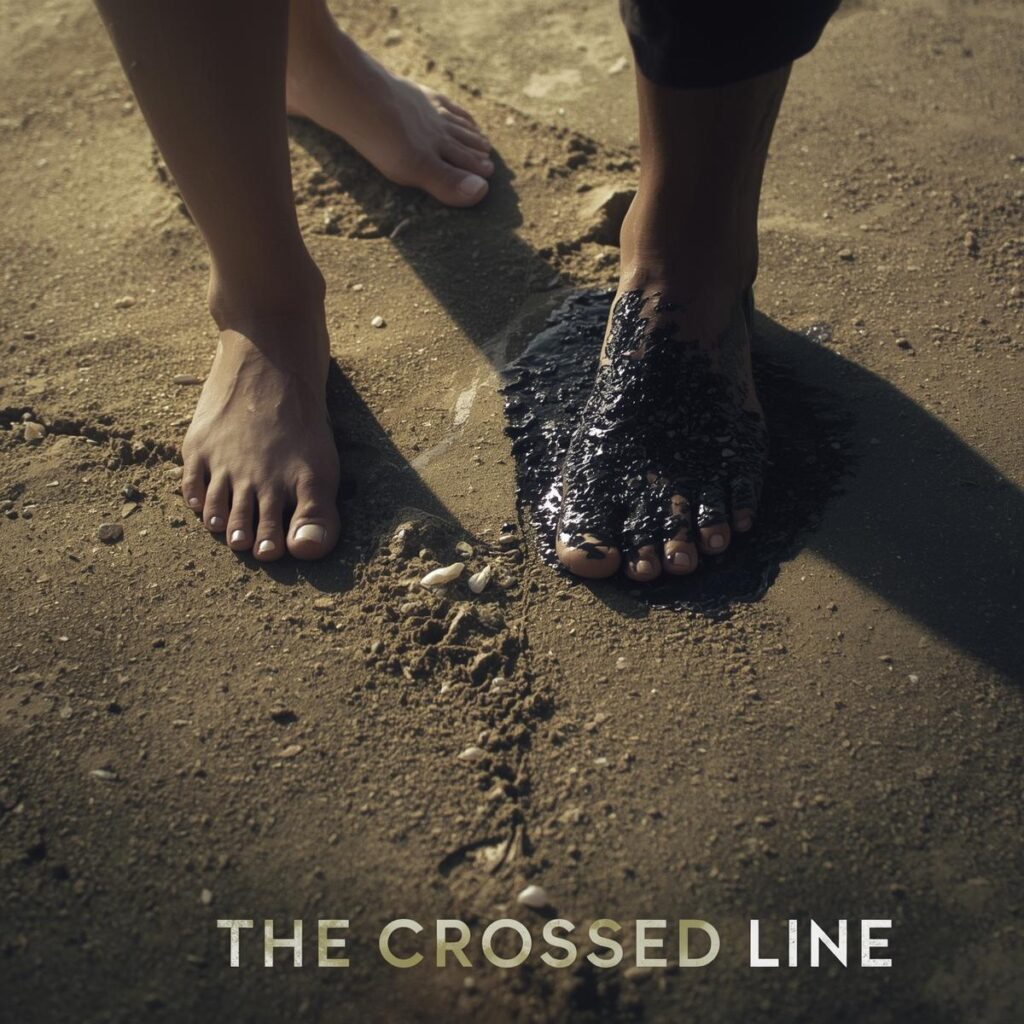
Definition: While sin is often a general failure, Transgression is a more specific and willful act. The Hebrew word “pesha” implies a rebellious crossing of a boundary. It is knowing what is right and deliberately stepping over the line God has drawn. It is a conscious act of disobedience. When King David confessed after his affair with Bathsheba, he said in Psalm 51:1, “Have mercy on me, O God, according to your unfailing love; according to your great compassion blot out my transgressions.” He wasn’t just confessing a general state of sinfulness; he was admitting to specific, willful acts of rebellion against God’s known law. If sin is missing the mark, transgression is knowingly stepping over a clearly drawn line. It’s willful disobedience. The Hebrew word pesha implies rebellion. It’s seeing the “Do Not Enter” sign and climbing right over the fence.
How to Recognize It:
I recall a time in my youth when my mother forbade me from doing something not nice. I knew the rule, I understood the reason, but I did it anyway. That was a transgression. In adulthood, it looks like indulging in an habit you know Scripture explicitly warns against, or deliberately breaking a promise because it’s no longer convenient. It’s a conscious choice to rebel. The Bible says, “But whoever commits sin also commits lawlessness, and sin is lawlessness” (1 John 3:4). Transgression is this lawlessness in action.
How to Fight It:
Fighting transgression requires a heart of submission. It’s about bending our will to God’s. This means cultivating a healthy fear of the Lord not a cowering terror, but a profound respect for His authority and wisdom. When we are tempted to leap over the fence, we must remember the consequences and, more importantly, the heart of the Father who put the boundary there for our protection. We must pray, “Keep back Your servant also from presumptuous sins; Let them not have dominion over me” (Psalm 19:13).
3. Iniquity: The Forged Chain

Definition: The deepest and most ingrained type of wrongdoing is iniquity. The Hebrew word avon carries the idea of being bent, twisted, or perverted. It refers to a chronic condition of moral distortion, a deeply rooted tendency toward evil that is often passed down through generations. It is the “why” behind the sin, the twisted nature that causes us to “miss the mark” and empowers us to “cross the line.” This concept explains generational patterns of addiction, abuse, or deceit. The consequences are severe, as Exodus 34:7 warns that God “does not leave the guilty unpunished; he punishes the children and their children for the sin of the parents to the third and fourth generation,” speaking specifically to the pervasive nature of iniquity. Iniquity is the most insidious of the three. If sin is a stray arrow and transgression is a leap over a fence, iniquity is the internal compass that is permanently bent, ensuring we always walk in the wrong direction. It is the habitual sin that has become a part of our character.
How to Recognize It:
This isn’t just a one-time action; it’s a state of being. It’s the person who lies so often they start to believe their own falsehoods. It’s the heart so given over to pride that it can no longer see its own fault. It’s the generational pattern of addiction or abuse that seems to have a life of its own. I saw this in my own family line a spirit of pain and disappointment passed down through generations; it was a twisted lens through which we viewed the world. Jesus spoke of this deep state: “But those things which proceed out of the mouth come from the heart… For out of the heart proceed evil thoughts, murders, adulteries, fornications, thefts, false witness, blasphemies. These are the things which defile a man” (Matthew 15:18-20).
How to Fight It:
You cannot straighten a bent compass with your own hands. Fighting iniquity requires deep, surgical repentance and the transformative power of Jesus Christ. It demands that we bring these deep, hidden areas into the light, often with the help of a pastor or trusted Christian counselor. It is a process of renewal, where God Himself gives us a new heart and a new spirit. “I will give you a new heart and put a new spirit within you; I will take the heart of stone out of your flesh and give you a heart of flesh” (Ezekiel 36:26).

Despite their differences, the consequences of all three are the same: spiritual death and separation from a holy God (Romans 6:23). The glorious hope of the Gospel is that Jesus Christ’s death on the cross addressed all of it. He was the perfect sacrifice who never missed the mark (sin), He took the punishment for our deliberate rebellion (transgression), and He bore the twisted weight of our corrupted nature (iniquity). As Isaiah 53:5-6 prophesied, “But he was pierced for our transgressions, he was crushed for our iniquities… and the Lord has laid on him the iniquity of us all.” In Christ, we are fully forgiven, cleansed, and given a new nature, freed from the power of sin, transgression, and iniquity.
A Call to Repentance and Freedom
Friend, the purpose of this truth is not to condemn you, but to set you free. God is not in the business of shaming us, but of healing us. He wants to forgive our stray arrows (sin), restore us from our rebellious leaps (transgression), and break the chains of our bent nature (iniquity).
Here are areas to bring before Him in repentance today:
- Types of Sin to Repent From: Gossip, jealousy, worry, pride, lustful thoughts, anger, neglect of God, and family.
- Types of Transgression to Repent From: Willful disobedience to God’s Word, breaking vows (marital or otherwise), theft, adultery, idolatry (putting anything before God), and slander.
- Types of Iniquity to Repent From: Generational strongholds of addiction, perversion, abuse, occult involvement, and a deeply rooted spirit of rejection, control, or religious pride.
Do not carry this weight any longer. The cross of Jesus Christ is the remedy for all of it. He took upon Himself our sin, our transgression, and our iniquity. “But He was wounded for our transgressions, He was bruised for our iniquities; The chastisement for our peace was upon Him, and by His stripes we are healed” (Isaiah 53:5).
Come to Him just as you are. Agree with Him about your fault, call it by its true name. Then, receive His forgiveness, His cleansing, and the power of His Holy Spirit to walk in a new way. Your freedom was purchased at a great price. It is waiting for you to claim it today.
.