
The Three Primary “Wills” of God: A Crucial Distinction
The most helpful way or framework for understanding God’s will comes from distinguishing between His Sovereign (Decretive) Will and His Moral (Preceptive) Will.
1. God’s Sovereign Will (Decretive or Hidden Will)
This refers to God’s eternal, unchanging, and infallible plan for everything that happens in the universe. It is His secret counsel that governs all events, and it always comes to pass. We are not responsible for knowing this will ahead of time; we are only responsible for trusting it.
- Nature: Secret, determinative, and unconditional. It cannot be thwarted.
- Key Scripture:
- Ephesians 1:11: God “works all things according to the counsel of his will.”
- Daniel 4:35: “He does according to his will among the host of heaven and among the inhabitants of the earth; and none can stay his hand or say to him, ‘What have you done?'”
- Romans 8:28: “And we know that for those who love God all things work together for good, for those who are called according to his purpose.”
- Examples:
- The creation of the world.
- The choice of Israel as His people.
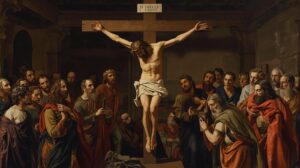
- The crucifixion of Jesus (Acts 4:27-28).
- The exact time and place of your birth.
God’s Sovereign Will is what He ensures will happen.
2. God’s Moral Will (Preceptive or Revealed Will)
This is God’s will of command, which He has clearly revealed in the Bible. It consists of His precepts, principles, and commandments that we are called to obey. This is the will we are responsible to know and follow.
- Nature: Revealed, prescriptive, and can be disobeyed.
- Key Scripture:
- Micah 6:8: “He has told you, O man, what is good; and what does the LORD require of you but to do justice, and to love kindness, and to walk humbly with your God?”
- 1 Thessalonians 4:3: “For this is the will of God, your sanctification: that you abstain from sexual immorality…”
- The Ten Commandments (Exodus 20) are a classic example of His moral will.
- Examples:
- Love your neighbor.
- Tell the truth.
- Forgive those who hurt you.
- Share the gospel.
God’s Moral Will is what He desires and commands us to do.
This distinction resolves a common tension: How can God’s will be done if people sin? The answer is that sin is a violation of God’s Moral Will, but it does not fall outside the scope of His Sovereign Will, which can even use evil acts to accomplish His ultimate good purposes (as with Joseph’s brothers in Genesis 50:20).
3. God’s Will of Disposition
Some theologians add a third category, which describes what is pleasing or agreeable to God. It reflects His desires and what brings Him delight, even if it doesn’t always happen.
- Nature: What God finds pleasing.
- Key Scripture:
- 2 Peter 3:9: “The Lord is not slow to keep his promise as some count slowness, but is patient toward you, not wishing that any should perish, but that all should reach repentance.” (God’s desire is for all to be saved, but His sovereign will allows for human rejection).
- 1 Timothy 2:4: God “desires all people to be saved and to come to the knowledge of the truth.”

How Can We Understand and Discern God’s Will?
Most of our anxiety about “finding God’s will” pertains to specific life decisions (e.g., career, marriage, moving). The process for this is called discernment. Here is a practical framework:
1. Ground Yourself in God’s Revealed Will (The Bible)
This is the non-negotiable foundation. You cannot discern God’s will for your personal life if you are ignoring His will for all people. Before seeking specific guidance, ensure you are obeying what is already clear.
- Are you pursuing holiness and sanctification?
- Are you loving God and loving your neighbor?
- Are you involved in a local church and using your spiritual gifts?
God will not lead you to do something that contradicts His Word. A “leading” to marry an unbeliever, for example, is not from God, as it violates His moral will (2 Corinthians 6:14).
2. Pray for Wisdom
God promises to give wisdom to those who ask.
- James 1:5: “If any of you lacks wisdom, let him ask God, who gives generously to all without reproach, and it will be given him.”
- Pray not for a sky-written sign, but for wisdom, clarity, and a heart that is aligned with His.
3. Seek Godly Counsel
Your own heart can be deceptive (Jeremiah 17:9). Wise, mature believers can provide invaluable perspective.
- Proverbs 11:14: “Where there is no guidance, a people falls, but in an abundance of counselors there is safety.”
- Share your decision with pastors, mentors, or spiritually mature friends who know you and the Bible well.
4. Consider the Circumstances
God governs the world through His providence. Open and closed doors can be indicators of His guidance. However, this is not foolproof some closed doors are tests of perseverance (like Paul’s “thorn in the flesh”), and some open doors may be temptations. Use circumstances as one data point, not the final authority.
5. Cultivate a Renewed Mind and Listen to the Holy Spirit
As you saturate yourself in Scripture and prayer, your mind is transformed.
- Romans 12:2: “Do not be conformed to this world, but be transformed by the renewal of your mind, that by testing you may discern what is the will of God, what is good and acceptable and perfect.”
- The Holy Spirit often guides through a settled sense of peace (Colossians 3:15), a convicting unease, or by bringing Scripture to mind in a relevant way.
6. Use the “Wisdom” Method
For decisions that are not explicitly addressed in the Bible (e.g., “Which job should I take?”), God has given us the gift of wisdom. Analyze your options using the following filters:
- Moral Filter: Does this option violate any clear command or principle of Scripture?
- Wisdom Filter: Which choice appears to be the wisest? Consider factors like your skills, family needs, financial implications, and potential for ministry and service.
- Desire Filter: What do you want to do? When your heart is aligned with God’s (Psalm 37:4), your sanctified desires can be a valid guide. Don’t assume God’s will is always the thing you dread the most.
- Spiritual Fruit Filter: Which path seems to foster greater spiritual growth, love for others, and fruitfulness for God’s kingdom?
Common Misconceptions
- Myth: God’s will is a secret map I have to decode. Truth: God is more concerned with your character than your specific geographic location. He is a good Father who guides His children.
- Myth: There is only one “perfect” choice, and if I miss it, my life is ruined. Truth: Within the boundaries of His moral will, God often gives us freedom and multiple good choices. His sovereign will is powerful enough to redeem our missteps and use them for our good.
- Myth: Feeling “peace” is the ultimate sign. Truth: Peace is an important indicator, but it must be coupled with the other factors above. Peace can sometimes be a result of ignoring consequences, not confirmation from God.
Conclusion
Understanding God’s will begins with trusting His Sovereign Will and obeying His Moral Will. For the specific decisions in life, we are called to a dynamic process of discernment prayerfully applying Scripture, seeking wisdom and counsel, and walking in step with the Spirit. The goal is not to uncover a hidden blueprint, but to faithfully follow the God who has already revealed everything we truly need to know for life and godliness.